
New York City feels like a financial mystery before you arrive. You want to plan your New York City travel budget with precision, but the numbers you find online vary wildly. The truth? NYC works for every budget. From the backpacker stretching every dollar to the family splashing out on Broadway front-row seats, the city delivers.
This guide breaks down the real costs for accommodation, food, transport, and attractions. Read it before you book — and you will arrive fully prepared.
Planning Your New York City Travel Budget: What to Expect
Your daily spend in NYC depends entirely on how you travel. Budget travellers can get by on $80 to $100 per day by staying in hostels, eating at delis and food carts, and taking full advantage of the city’s enormous range of free experiences. Mid-range travellers typically spend $200 to $350 per day. That covers a comfortable hotel, meals at proper restaurants, and a handful of paid attractions.
Comfort travellers who want nice hotels, Broadway shows, and fine dining can easily spend $500 per day or more. Most first-time visitors land somewhere in the mid-range — and that is very achievable. The key is planning in advance and knowing where your money goes furthest.
Accommodation: Where to Stay on Every Budget
Budget Stays: Hostels and Affordable Hotels
Hostels in Manhattan charge around $40 to $70 per night for a dorm bed. Private hostel rooms typically run $90 to $130. Look to the East Village, Harlem, and Astoria in Queens for genuinely affordable guesthouses and independent hotels.
Long Island City in Queens is a strong budget option. Subway links into Manhattan are fast and direct. You get a real neighbourhood feel and save significantly on room rates compared to Midtown. Williamsburg in Brooklyn also offers good value, especially if you book early.
Mid-Range Hotels
Expect to pay $180 to $350 per night for a comfortable mid-range hotel in Manhattan. Chelsea, the Upper West Side, and Midtown West all offer solid options within easy reach of key attractions. Boutique hotels in these areas often have far more character than the large chains at similar prices.
Booking two to three months in advance makes a real difference. NYC hotel prices rise sharply as your travel date approaches. Early booking is not just cheaper — it gives you far better choice of location.
Splurge: Luxury and Boutique Hotels
Boutique hotels in Greenwich Village, the High Line area, and Tribeca regularly charge $400 to $700 per night. Five-star properties on Fifth Avenue or Central Park South go considerably higher. If a luxury stay is on your list, set a firm ceiling before you start browsing — NYC five-star rates can genuinely surprise you.
Getting Around New York City
The NYC Subway
The subway is the best-value transport option in the city. A single subway ride costs $2.90. An unlimited weekly MetroCard costs $34. For a week-long trip, the unlimited card pays for itself after fewer than twelve journeys. Buy one on your first day.
The subway runs 24 hours a day, seven days a week. That alone sets it apart from most world cities. You can travel from Coney Island in Brooklyn to the Upper West Side in Manhattan at 3am without difficulty — and without paying for a taxi.
Walking, Ferries, and Citi Bike
Manhattan’s grid layout makes it extremely walkable. Many visitors underestimate how much ground they cover on foot each day. Walking is free, and it is often the best way to discover the city at street level.
The Staten Island Ferry is completely free. It gives you some of the best views of the Manhattan skyline in the city. There is no better value in NYC than standing on the deck of that ferry as it crosses the harbour.
Citi Bike, the city’s bike-share scheme, offers a day pass for around $15. For covering Brooklyn’s waterfront, Queens’ quieter streets, or the paths along the Hudson River, cycling is faster than the subway and far more enjoyable. Taxis and rideshares are available everywhere but add up quickly. Use them for late nights or heavy luggage — not as your daily default.
Love New York? Get the inside story every week.
Join 1,000+ New York lovers. Hidden gems, local secrets and travel inspiration — free in your inbox.
Eating in New York City: Every Budget Covered
New York is one of the world’s greatest food cities. The good news is that you do not need to spend much to eat brilliantly. Our New York City food guide covers all the essential dishes and the best places to find them.
Eating Like a Local for Less
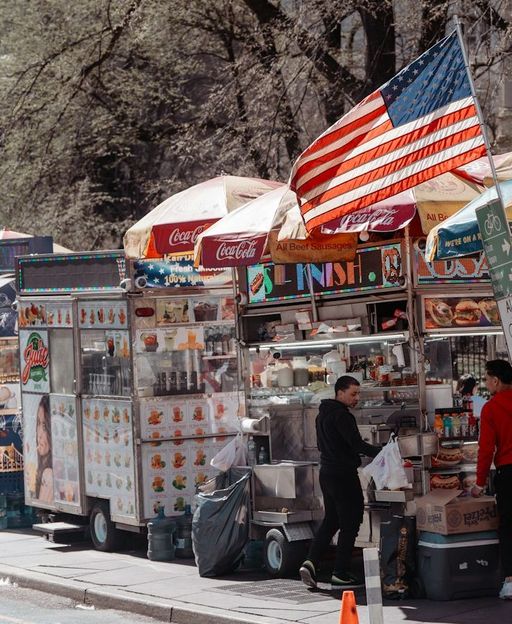
A slice of pizza from a corner shop costs $3 to $5. A bagel with cream cheese runs $2 to $4. A hot dog from a cart costs $3 to $5. You can eat very well on $25 to $40 per day if you embrace street food, local delis, and the bodegas that New Yorkers rely on daily.
Flushing in Queens stands out as one of the best budget food destinations in the entire city. The food courts there serve outstanding Chinese and Korean dishes for $8 to $15. Chinatown in Manhattan offers similar value. Harlem and the South Bronx have superb Caribbean and Latin American food at prices that will genuinely impress you.
Mid-Range Dining
A sit-down meal at a mid-range restaurant costs around $20 to $45 per person before drinks. The West Village, Park Slope in Brooklyn, Astoria in Queens, and Jackson Heights are all excellent areas for neighbourhood restaurants that punch well above their price.
Lunch specials are often significantly cheaper than dinner at the same restaurant. Try a nicer spot at lunchtime and you get the experience at a fraction of the dinner bill.
Splurge Dining
New York has some of the finest restaurants anywhere in the world. A tasting menu at a top-end restaurant runs from $150 to $400 per person or more. Book at least four to six weeks in advance for the best tables — they disappear fast.
Attractions and Entertainment: Free, Affordable, and Worth Every Penny
Free Attractions in NYC
New York is extraordinarily generous with free culture. The Staten Island Ferry is free. Central Park is free. Walking across the Brooklyn Bridge costs nothing. The High Line — the elevated park running through Chelsea — is free. Washington Square Park in Greenwich Village is free.
Many of the best museums offer pay-what-you-wish evenings or free admission on selected days. Our guide to free things to do in NYC lists more than two dozen experiences that cost absolutely nothing.
Paid Attractions and Museums
The Metropolitan Museum of Art charges $30 for adults. The Museum of Modern Art (MoMA) costs $30. Top of the Rock observation deck charges $40. The 9/11 Memorial Museum costs $30. These are genuine world-class experiences and worth every penny — but plan which ones matter most to you before you arrive.
The New York CityPASS bundles several major attractions at a reduced rate. If you plan to visit four or more paid attractions, it often saves money. Read the details carefully before buying — not every combination makes sense depending on your interests.
Broadway on a Budget
Full-price Broadway tickets can reach $150 to $300 per seat. But smarter options exist. The TKTS booth in Times Square sells same-day tickets at 20% to 50% off face value. Many shows release rush tickets for $35 to $49 on the morning of a performance. Broadway is not as expensive as its reputation suggests — if you are flexible.
For a full plan of how to make the most of your time, our 3-day New York City itinerary builds in free attractions alongside the must-sees and keeps your daily spend realistic.
Sample Daily Budgets
Budget Traveller: $80–$110 per day
- Hostel dorm bed: $50–$70
- Food (delis, carts, corner pizza): $20–$30
- Transport (MetroCard daily equivalent): $12–$15
- Free attractions: $0
Mid-Range Traveller: $200–$300 per day
- Hotel in Manhattan or Brooklyn: $150–$200
- Food (mix of casual and sit-down): $50–$80
- Transport (MetroCard): $15
- One paid attraction: $25–$35
Comfort Traveller: $400–$600+ per day
- Boutique hotel: $300–$450
- Restaurants and drinks: $80–$120
- Transport (mix of subway and taxis): $20–$30
- Experiences, shows, and museums: $50–$150
Money-Saving Tips for Your NYC Trip
- Buy an unlimited weekly MetroCard on day one. Use the subway instead of taxis wherever possible.
- Eat a proper breakfast at your hotel or a corner deli. This cuts your midday spend considerably.
- Visit museums on their free or discounted evenings. Many offer these regularly.
- Book hotels at least six weeks in advance. Last-minute rates in NYC are punishing.
- Download the NYC Parks app for free events. Concerts, film screenings, and performances happen throughout the year.
- Avoid sitting down at restaurants directly on Times Square. Tourist trap pricing is real — and painful.
- Head to Queens and Brooklyn for the city’s best cheap eats. Flushing, Astoria, and Jackson Heights all deliver outstanding food at a fraction of Manhattan prices.
For a full list of practical advice, read our New York City travel tips guide before you go.
Frequently Asked Questions
How much money do I need for a week in New York City?
A budget traveller can get through a week on around $600 to $750 per person, staying in hostels and eating street food. A mid-range New York City travel budget for a week typically runs $1,400 to $2,100 per person, covering a comfortable hotel, restaurant meals, and several paid attractions. Add more if you plan Broadway shows or luxury dining.
What is the cheapest way to get around New York City?
The subway is the cheapest way to travel in NYC. An unlimited weekly MetroCard costs $34 and covers every subway and bus journey for seven days. Walking is also excellent — Manhattan’s grid layout makes it easy to cover large distances on foot for free.
Is New York City expensive for food?
New York has food at every price point. You can eat a full, satisfying meal for $8 to $15 at a deli, food cart, or local bodega. Sit-down restaurants range from $20 to $45 per person at mid-range spots. The city is not cheap by international standards, but budget eating here is genuinely delicious and endlessly varied.
When is the cheapest time to visit New York City?
January and February are generally the most affordable months. Hotel prices drop sharply after the Christmas and New Year rush, and visitor numbers fall. The weather is cold, but all the indoor attractions are just as rewarding. Our best time to visit New York City guide covers the full seasonal breakdown.
Join 1,000+ New York Lovers
Every weekday morning, get New York’s hidden gems, local secrets, and travel inspiration — the kind you won’t find in any guidebook.
Subscribe free — enter your email:
Love more? Join 64,000 Ireland lovers → · Join 43,000 Scotland lovers → · Join 30,000 Italy lovers →
Free forever · · Unsubscribe anytime

Subscribe Free