
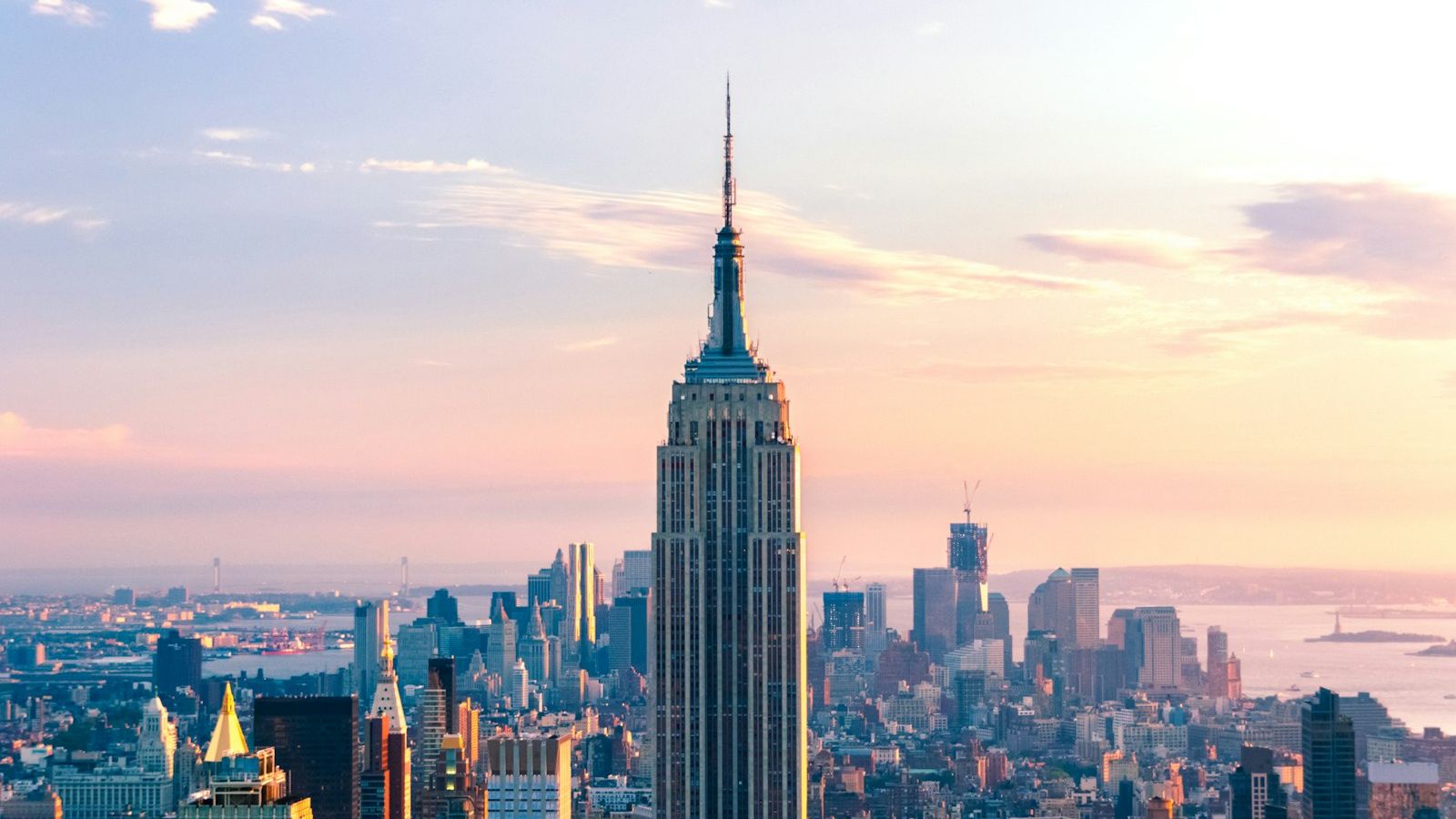
In the spring of 1930, New York was deep in the Great Depression. Banks had failed. Millions were out of work. And in the middle of Midtown Manhattan, 3,400 workers were raising the world’s tallest skyscraper at a pace of fourteen floors of steel per week.
When it finally opened, almost nobody showed up to rent a floor.
A Race Nobody Was Willing to Lose
The Empire State Building was built to win. John Jakob Raskob, a former General Motors executive, wanted to build the tallest structure on earth. His rival was Walter Chrysler, who was secretly assembling a gleaming stainless steel crown inside the upper floors of his own skyscraper just a mile away — a story of architectural deception that still astonishes.
Raskob’s answer was simple: go higher. He chose a plot at 34th Street and Fifth Avenue and brought in architect William Lamb. The brief reportedly came down to one line: how high can you make it so that it won’t fall down?
The answer was 1,454 feet — including the spire. It was a number designed to make everything else in New York look small.
410 Days, 3,400 Workers
Construction began on March 17, 1930. At its peak, more than 3,400 workers were on site simultaneously. Some were recent immigrants. Many were Mohawk ironworkers from Kahnawake, renowned for their steadiness at extreme heights.
They ate lunch perched on open steel beams hundreds of feet in the air. They walked girders without safety nets. And they built fourteen floors of steel framework every single week.
The entire steel skeleton was completed in less than six months. On May 1, 1931 — just 410 days after the first shovel went in — President Hoover flipped a ceremonial switch from Washington, and the lights came on. The world’s tallest building was done.
The Mooring Mast That Never Moored
The spire at the top was not decoration. It was engineered as a mooring mast for transatlantic dirigibles.
The plan was entirely serious: airships crossing the Atlantic would dock at the summit, passengers would cross a gangway into an elevator lobby, and descend directly into Midtown Manhattan. A small waiting room and baggage area were actually built into the upper floors. It was, briefly, the future.
It was used exactly twice — both times badly. The updrafts and crosswinds above Midtown made the whole scheme genuinely dangerous, and the idea was quietly dropped. Today, the mast carries broadcast antennas for most of New York’s major television stations. The waiting room was converted to office space.
Enjoying this? Join New York lovers getting stories like this every week. Subscribe free →
Why They Called It the Empty State Building
The timing of the opening could not have been worse. The Depression had gutted demand for office space across New York. Despite the building’s prestige — despite being the most famous address in the city on day one — tenants were hard to find.
For nearly two decades, much of the building sat empty. At its lowest point, only about a quarter of the office space was occupied. New Yorkers took to calling it the Empty State Building. It was a nickname that stung, but stuck.
What saved it wasn’t commerce. It was King Kong. The 1933 film planted the building in the global imagination overnight. Tourists began arriving just to see what the giant ape had climbed. The observation deck, originally considered a secondary feature, became the building’s most reliable source of income. By the late 1940s, four million visitors a year were riding to the top.
The Plane That Couldn’t Bring It Down
On July 28, 1945, a U.S. Army B-25 Mitchell bomber got lost in heavy fog over Manhattan and flew directly into the 79th floor at full speed. The impact blew an eighteen-foot hole through the building’s exterior. Fourteen people were killed.
By the following Monday, most of the damaged floors had reopened.
The steel frame had absorbed the entire force of the impact without structural compromise. An elevator operator named Betty Lou Oliver survived a freefall of 75 floors when both her elevator cables were severed in the crash. She was pulled from the rubble in the basement alive — and still holds the Guinness World Record for surviving the longest elevator fall in history.
A Light Show Written in the Sky
Since the 1970s, the tower lights at the top of the Empire State Building have served as New York’s unofficial public diary.
Pink for Valentine’s Day. Green for St. Patrick’s Day. Red and blue for Independence Day. Gold for Hanukkah. Blue and orange for a Mets playoff run. Hundreds of custom combinations over the decades — for causes, anniversaries, and moments the city needs to mark.
On any given night, if you know the color, you know what New York is thinking about.
The Empire State Building was built during one of the darkest periods in American history. It sat nearly empty for twenty years. It survived a plane crash. It became the most recognizable building on earth anyway.
That sounds, somehow, exactly like New York.
You Might Also Enjoy
- The Chrysler Building’s Crown Was a Secret — Until It Pierced the Sky in 90 Minutes
- The Secret Beneath Grand Central That Franklin Roosevelt Didn’t Want Anyone to Know
- The Wooden Tanks on Every New York Rooftop — and the Family That Still Builds Them
Plan Your New York Trip
Visiting the Empire State Building? Our complete New York City travel guide covers tickets, timing, and everything else you need to know before you go — plus the best neighborhoods to explore while you’re there.
Join New York Lovers
Every weekday morning, get New York’s hidden gems, neighbourhood stories, food origins, and city secrets — straight to your inbox.
Subscribe free — enter your email:
Love more? Join 65,000 Ireland lovers → · Join 43,000 Scotland lovers →
Free forever · Unsubscribe anytime
