
New York City is one of the most expensive cities on earth — but you can spend a full day here without spending a penny. From a park that rivals anything in Europe to a ferry ride with some of the finest skyline views in the world, free things to do in New York City are not consolation prizes for those on a budget. Many of them are the best things the city has to offer.
This guide covers 18 genuinely brilliant free experiences — not just “walk around and look at things” suggestions, but the specific spots, the right times to visit, and the details that make each one worth seeking out. Whether you have a full week or a single afternoon, you can fill it beautifully for free.
1. Walk the Brooklyn Bridge
The Brooklyn Bridge walk is New York’s single best free experience. The 1.3-mile crossing takes roughly 30 to 45 minutes on foot, and the views across the East River toward Lower Manhattan are extraordinary at every hour. The bridge opened in 1883 and was the longest suspension bridge in the world at the time — walking its wooden promenade still feels like stepping into a different century.
Start from the Brooklyn side if you want the walk to end in Manhattan near City Hall. Early morning is quieter. By mid-morning the bridge fills with tourists, cyclists, and commuters. The upper promenade belongs to pedestrians — stick to the footpath marked for walking and give cyclists plenty of room.
2. Central Park — Deeper Than Most Visitors Go
Central Park spans 843 acres and contains 58 kilometres of paths. Most visitors see Bethesda Fountain, Strawberry Fields, and the Great Lawn — and then call it done. The park rewards those who go further. The Ramble is a 36-acre woodland where over 200 bird species have been recorded during migration season. The North Woods, near 110th Street, feels genuinely wild. Harlem Meer in the park’s north-eastern corner has rowing boats for hire in summer — but walking its shoreline costs nothing.
Shakespeare in the Park summer performances at the Delacorte Theatre are also free, though they require a same-day ticket queue that starts early. On any summer evening you will find free concerts on the Great Lawn as well. Bring a blanket and arrive before sunset.
For the quietest spots in Central Park, skip the southern end entirely at weekends and head directly to the north.
3. The Staten Island Ferry
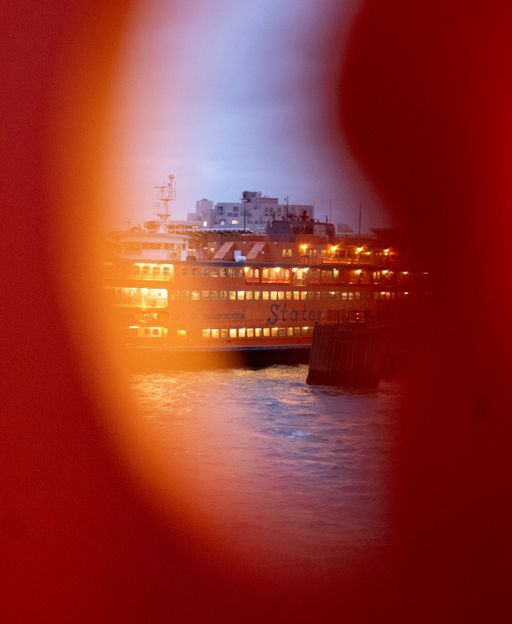
The Staten Island Ferry is the most underrated free thing in New York. It runs 24 hours a day, seven days a week, every 15 to 30 minutes — and it is completely free. The 25-minute crossing gives you an unobstructed view of the Manhattan skyline, the Statue of Liberty, Governors Island, and the harbour. You can ride in both directions without getting off on Staten Island, though there is a short wait between crossings.
Go at dusk in summer for the full effect: the sun drops behind New Jersey, the ferry passes the Statue of Liberty bathed in golden light, and the Manhattan towers start to illuminate. Visitors who pay for the Statue of Liberty boat often look confused when they realise the ferry passes just as close for free.
4. The High Line
The High Line is a 1.45-mile elevated park built on a disused freight railway running along Manhattan’s west side, from the Meatpacking District through Chelsea and into Hudson Yards. It opened in 2009 and has become one of the most visited places in the city. The planting is extraordinary, the art installations change regularly, and the views across Hudson Yards and west toward New Jersey are unlike anything else in Manhattan.
The park is free to enter at any of its 13 access points. Visit in spring when the ornamental grasses and wildflowers are at their height, or in autumn when the seed heads turn copper and gold. Weekday mornings before 10am are the quietest times to walk it.
The Chelsea neighbourhood below the High Line is worth exploring on foot afterwards — see the Chelsea guide for what is nearby.
5. The New York Public Library Main Branch
The main branch of the New York Public Library on Fifth Avenue and 42nd Street is free to enter, and the building itself is one of the finest Beaux-Arts interiors in the city. The Rose Main Reading Room runs 78 metres in length, with 15-metre ceilings and painted clouds — it is a room that stops visitors in their tracks.
The ground floor hosts regular free exhibitions on New York history, literature, and culture. The map room holds extraordinary historical cartography. The marble staircase, the Astor Hall, and the building’s facade — guarded by the famous lion sculptures Patience and Fortitude — are all free to experience. The library steps on Fifth Avenue deserve a pause of their own.
6. Brooklyn Bridge Park
Brooklyn Bridge Park stretches for 1.3 miles along the Brooklyn waterfront, from the base of the Brooklyn Bridge south toward Atlantic Avenue. The views of Lower Manhattan from here are extraordinary — arguably better than any paid viewpoint in the city. Pier 1 has sloping lawns where New Yorkers come to read, picnic, and watch the light change on the skyline. Pier 6 has a sandpit and splash pad that children love in summer.
Walking along the waterfront and sitting at any of the piers costs nothing. On summer evenings, Movies with a View brings free outdoor cinema to the park. Check the Brooklyn Bridge Park website for the schedule each year.
7. Prospect Park, Brooklyn
Frederick Law Olmsted — who also designed Central Park — considered Prospect Park his finest work. The park covers 585 acres in the heart of Brooklyn and contains a long meadow, a boathouse, a wildlife centre, and a lake. It is almost always quieter than Central Park and draws a very local crowd. On weekends in summer, families arrive with food and musical instruments — the park has a live, communal feel that Central Park can lack.
The park hosts free concerts at the Bandshell throughout summer. The Audubon Center at the Boathouse runs free nature programmes for visitors of all ages. Simply walking the Long Meadow, the ravine trails, and the lakeside path offers a full afternoon in one of the finest urban parks in America — at no cost whatsoever.
8. Free Museum Days and Pay-What-You-Wish Admissions
New York has some of the world’s great museums, and many offer free or pay-what-you-wish admission on specific days or for specific groups.
- The Metropolitan Museum of Art — Pay-what-you-wish for New York State residents; suggested admission applies for visitors from out of state but is technically voluntary
- The Museum of Modern Art (MoMA) — Free every Friday from 17:30 to 21:00 (verify current schedule)
- The Whitney Museum of American Art — Pay-what-you-wish on Friday evenings from 19:00
- The Bronx Museum of the Arts — Always free, no suggested donation
- The Brooklyn Museum — Free every first Saturday of the month from 17:00 to 23:00
- The Queens Museum — Free on Sundays
- The Museum of Arts and Design — Pay-what-you-wish on Thursday evenings
Museum free-day policies change, so always verify directly with each institution before visiting. Many also offer free admission for children under 12 regardless of the day.
9. Governors Island
Governors Island sits in Upper New York Harbour, a short ferry ride from Lower Manhattan or Brooklyn. The island is car-free and covers 172 acres. The ferry costs a few dollars each way, but once on the island, all parks, gardens, art installations, and exhibitions are entirely free. The ferry is free for visitors under 18 at all times and free on weekend mornings before noon for everyone.
The Hills on the southern end of the island offer some of the most dramatic views of the Statue of Liberty and Manhattan harbour available anywhere in the city — at no cost beyond the ferry fare. The island is open from late May to early October. Bring a bicycle or hire one there to cover the full grounds comfortably.
10. Walking New York’s Most Beautiful Streets
New York rewards those who walk slowly and look up. Some of the best free experiences in the city are simply the streets themselves.
The West Village
The West Village runs west of Seventh Avenue in lower Manhattan, where the street grid breaks down and roads follow old farm paths. Federal-style townhouses from the 1830s and 1840s line narrow streets. Grove Street, Perry Street, and Commerce Street are the most beautiful. Walking here on a weekend morning, before the brunch crowds arrive, feels like a different city entirely.
DUMBO, Brooklyn
DUMBO (Down Under the Manhattan Bridge Overpass) offers one of New York’s most famous framed views: the Empire State Building seen through the arch of the Manhattan Bridge from Washington Street. It costs nothing to stand there. The cobblestone streets and converted warehouse buildings make this one of the most photogenic corners of Brooklyn.
Harlem
A walk through Harlem — up Malcolm X Boulevard to 125th Street, east along 125th, south on Fifth Avenue past Marcus Garvey Park — passes some of the city’s finest brownstones, murals, churches, and community life. On a Sunday morning, when churches hold services, the neighbourhood sounds unlike any other place in New York.
11. Free Outdoor Film and Summer Concerts
New York’s outdoor free entertainment season runs from late May through September, and it is generous. Bryant Park hosts Monday evening film screenings on its lawn all summer — arrive early to claim a spot on the grass before films begin at dusk. SummerStage in Central Park and across the five boroughs runs a full programme of free concerts from late June through August, ranging from Latin music to hip hop to jazz and classical performances.
Lincoln Center Out of Doors brings free dance, music, and performance to the Lincoln Center plazas throughout August. The free Shakespeare in the Park performances at the Delacorte Theatre require same-day tickets, but the experience — professional theatre in the open air at dusk, surrounded by Central Park — is remarkable. Check the Public Theater website each summer for the full season schedule.
12. The 9/11 Memorial Pools
The 9/11 Memorial in Lower Manhattan is free to visit. The two reflecting pools sit in the footprints of the original Twin Towers. Water falls into the pools from all four sides and disappears into a central void — quietly extraordinary, particularly on a still morning. The bronze panels around each pool bear the names of the 2,977 people killed in the attacks of 11 September 2001 and 26 February 1993.
The 9/11 Museum requires a paid ticket, but the memorial pools, the Survivor Tree, and the entire outdoor plaza are free to visit at any time. Early morning, before the crowds arrive, is the best time to stand quietly at the pools and take in the scale and the silence.
13. Flushing Meadows-Corona Park, Queens
Flushing Meadows-Corona Park in Queens hosted both the 1939 and 1964 World’s Fairs, and it retains the grand, futuristic ambition of those events. The Unisphere — a 43-metre stainless steel globe — stands at the park’s heart. Walking the park around Meadow Lake and Willow Lake, past the Queens Museum, and through the grounds of the USTA Billie Jean King National Tennis Center takes several hours and costs nothing at all.
The park feels especially alive at weekends, when families from across Queens bring food and music and fill the lawns. It reflects the extraordinary diversity of New York life in a way that Manhattan parks rarely do.
14. The Oculus at World Trade Center
The Oculus — the transportation hub designed by Santiago Calatrava and opened in 2016 — is one of the most dramatic public interiors in New York. The white ribbed structure soars above the concourse floor. On the spring equinox, 21 March, a beam of sunlight passes through the central skylight at midday and illuminates the entire length of the hall. Visiting is completely free. The plaza outside provides unobstructed views of One World Trade Center — the tallest building in the Western Hemisphere at 541 metres — without paying for the observation deck.
15. The Elevated Acre at 55 Water Street
One of Manhattan’s best-kept free secrets is the Elevated Acre at 55 Water Street in the Financial District. Ride the escalator up from the street and you arrive at a rooftop park — a genuine patch of greenery above the city with views across the East River toward Brooklyn and Governors Island. Most visitors to Lower Manhattan never find it. The park is open on weekdays during business hours and offers views of genuine quality at no cost.
16. Street Art in Bushwick
The Bushwick Collective in Brooklyn is the largest open-air street art installation in New York, concentrated along Troutman Street and St Nicholas Avenue. Local and international artists have painted the warehouses, gates, and building facades in this neighbourhood for over a decade. Walking through takes 45 minutes to an hour if you move slowly and look at everything properly.
The art changes regularly as new murals replace old ones. There is no entrance and no ticket — you simply walk the streets. Take the L or J train to Myrtle-Broadway in Brooklyn and walk north. Visit by day for the best light and the best view of the colours.
17. The East River Esplanade
The East River Esplanade runs along the Manhattan waterfront from the 60s down through the East Village. Walking south along the water from East 60th Street toward the Brooklyn Bridge gives a slowly shifting view of the Manhattan skyline — the UN building, the Chrysler Building, One World Trade Center — framed by water and bridge cables. It is not as famous as the Brooklyn waterfront view, but it is free, seldom crowded, and genuinely beautiful in the early evening when the light falls across the river.
For the best views in New York City, the East River Esplanade walk at dusk ranks among the finest free experiences the city offers.
18. Manhattan’s Quietest Free Spots
New York has remarkable free pockets of calm between the noise. The Heather Garden in Fort Tryon Park in northern Manhattan is the largest public garden in any borough park — a hillside of herbaceous borders with views across the Hudson toward the Palisades. Inwood Hill Park, at the very northern tip of Manhattan, contains the last natural forest on the island. These spots see far fewer visitors than Central Park but deliver a quality of landscape and quiet that is genuinely rare in the city.
For Manhattan’s most surprisingly peaceful spots, the outer edges of the island consistently outperform the tourist-heavy centre.
Practical Tips for a Free Day in New York
Getting Around on a Budget
A single subway fare on an OMNY card covers travel across the entire subway network for a flat fee. Most of the free experiences in this guide are walkable from one another in geographical clusters — plan by neighbourhood rather than criss-crossing the city repeatedly. The Staten Island Ferry is free. The Governors Island Ferry costs a few dollars each way. Many of the best parks — Central Park, Prospect Park, Brooklyn Bridge Park — are fully accessible on foot from nearby subway stations.
Eating Cheaply Without Sacrificing Quality
Chinatown in Manhattan offers dumplings and soup noodles for £4 to £6. Jackson Heights in Queens delivers extraordinary South Asian, Colombian, Mexican, and Tibetan food, most of it under £10. A hot dog from a street cart in Central Park costs around £2.50. Bringing food into Central Park, Brooklyn Bridge Park, or Prospect Park is encouraged — it is how New Yorkers actually use these spaces.
Best Time of Day for Free Attractions
Early morning is the best time for the Brooklyn Bridge walk, the 9/11 Memorial, and the Elevated Acre. Evening is best for the Staten Island Ferry skyline views, free outdoor concerts, and waterfront promenades. Weekday mornings are quietest at the High Line and the New York Public Library. Museums with free evening hours tend to draw larger crowds toward closing time — arrive at the start of the free period rather than the end.
Frequently Asked Questions
What are the best free things to do in New York City?
The best free things to do in New York City include walking the Brooklyn Bridge, riding the Staten Island Ferry, visiting Central Park and Prospect Park, exploring the High Line, viewing the 9/11 Memorial pools, and attending free outdoor concerts and film screenings through the summer months. Many of the city’s finest museums also offer free or pay-what-you-wish admission on specific evenings.
Is the Staten Island Ferry really free?
Yes, the Staten Island Ferry is completely free in both directions, 24 hours a day, seven days a week. It provides close-up views of the Statue of Liberty and the Manhattan skyline without any booking or ticket required. It is widely regarded as the single best free experience in New York City, and it runs frequently enough that no planning is needed.
Which New York City museums offer free admission?
The Bronx Museum of the Arts is always free. MoMA is free on Friday evenings. The Brooklyn Museum is free on the first Saturday evening of each month. The Whitney Museum is pay-what-you-wish on Friday evenings. The Metropolitan Museum of Art is pay-what-you-wish for New York State residents, with a suggested donation for visitors from outside the state. Always verify current policies directly with each museum before visiting.
How do I get around New York City cheaply?
The New York City subway runs on a flat fare using an OMNY contactless card or a MetroCard, and covers almost every major free attraction in this guide. Plan visits by neighbourhood to reduce the number of subway rides needed. The Staten Island Ferry is free. Many of the best free parks and landmarks are walkable from one another once you are in the right area of the city.
Join 1,000+ New York Lovers
Every week, get New York’s hidden gems, local secrets, and travel inspiration — the kind you won’t find in any guidebook.
Subscribe free — enter your email:
Love more? Join 64,000 Ireland lovers → · Join 43,000 Scotland lovers → · Join 30,000 Italy lovers →
Free forever · One email per week · Unsubscribe anytime
