
In 1906, an earthquake swallowed the immigration records of half a million people. For Chinese Americans, it became the beginning of one of the most extraordinary acts of community survival in the history of New York City.
The Law That Made New York Strangers
The Chinese Exclusion Act of 1882 was the first — and only — American law to ban immigration by race. Chinese laborers could not enter the United States. Those already here could not become citizens, could not vote, could not testify in court against white defendants.
In lower Manhattan, a small community on Mott Street adapted. They built their own systems, kept their own records, and solved their own disputes in rooms that city government would never enter.
They called it Chinatown. It was more accurate to call it a republic within a republic.
The Paper Son System
When the San Francisco earthquake destroyed city records in 1906, Chinese Americans realized something: no one could disprove their claims of citizenship.
Men who had been born in China began to declare themselves American-born. Then they “discovered” they had sons — paper sons — who qualified for entry. They sold these slots to new arrivals. Each buyer received a coaching book: a detailed false family history to memorize before arriving at immigration.
The questions were specific. How many windows in your grandfather’s house? Which direction did the front door face? What was your mother’s name before she was married?
Men and women arrived in New York with American names their parents had never given them. Some kept these names for the rest of their lives. Their children grew up not knowing their real family surnames. It wasn’t fraud. It was survival. The exclusion laws themselves were the original injustice.
New York has always been a city that absorbed the stories of those who arrived with almost nothing. But few arrivals faced what Chinatown’s early residents did — a legal system designed to erase them.
The Government Chinatown Built for Itself
Because American courts and city institutions were closed to them, Chinatown built its own.
The Chinese Consolidated Benevolent Association — known informally as the “Six Companies” — served as an unofficial government. It mediated disputes. It handled welfare. It ran schools. It organized funerals for those who had no one else.
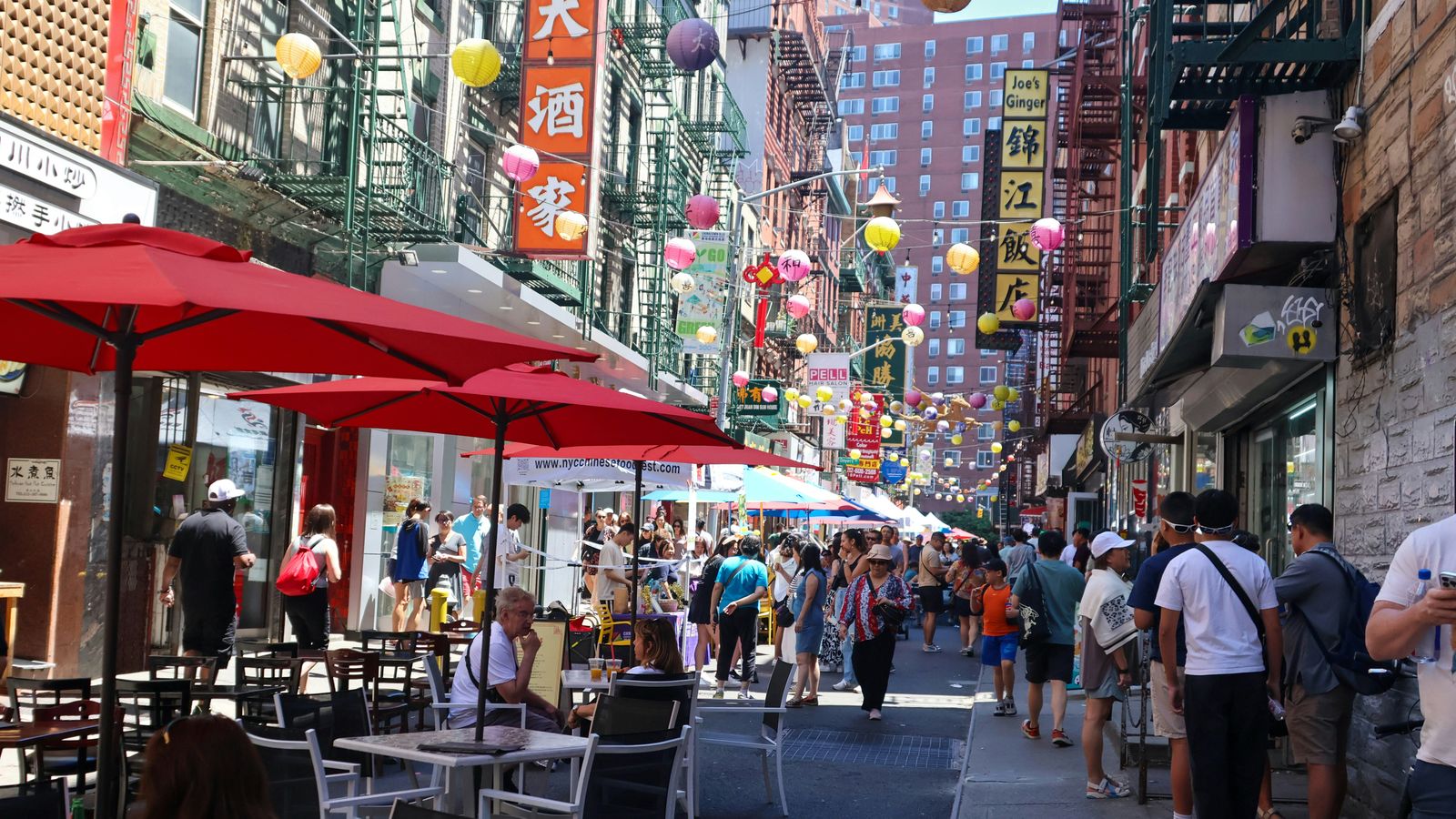
The tongs — merchant associations — controlled sections of the street economy, with their own hierarchies and their own rules. The streets of Mott, Pell, and Doyers were governed by systems the city of New York had never approved and would never have designed.
This was not lawlessness. It was governance in a vacuum — a community doing, for itself, what the state refused to do. The buildings on those blocks today still sit above that history.
Enjoying this? Join New York lovers getting stories like this every week. Subscribe free →
When the Doors Finally Opened
The Immigration and Nationality Act of 1965 changed everything. For the first time in eighty years, Chinese immigrants could enter America in real numbers.
Chinatown expanded beyond its original few blocks. Cantonese-speaking families who had shaped the community for generations were joined by Fujianese immigrants — arriving from a different part of China, speaking a different dialect, carrying different foods and different customs.
The community fractured and grew at the same time. By the 1990s, you could move from a Cantonese dim sum restaurant to a Fujianese noodle house to a Malaysian grocery in the space of three blocks. Chinatown absorbed them all. It had practice.
What You’re Walking Through
The blocks haven’t changed much. The fish markets still open before dawn. Roasted duck hangs in the same windows it has for seventy years. On Lunar New Year, firecrackers crack off the buildings and lion dancers pour into the street in a tradition that has never paused for anything — not hard winters, not the slowest gentrification in lower Manhattan.
Gentrification has tried. Galleries have moved in along the edges. Boutique hotels have appeared on the borders. But Chinatown’s density, its layered community associations, its deeply embedded commercial culture — these have resisted in ways that other neighborhoods couldn’t manage.
If you walk down Doyers Street today — the short, curved alley that once earned darker nicknames — you’ll pass restaurants that have been there since the 1930s, a barber that opened in the 1950s, family businesses that have changed hands without the families leaving.
The names on the mailboxes are American names. Some of them always were. Some of them weren’t. The neighborhood has never asked too many questions about the difference. That tolerance, earned through suffering, may be the deepest thing it has to offer.
Walk slowly. There’s more history beneath these sidewalks than most New York blocks will ever know.
You Might Also Enjoy
- Forty Percent of All Americans Have a Relative Who Stood on This Island — the Ellis Island story
- The New York District That Dressed America for a Century — and Still Does — another immigrant neighborhood that built an industry
- The Best Neighbourhoods in NYC for Tourists — your guide to exploring New York’s most distinctive communities
Plan Your New York Trip
Chinatown is best explored on foot, starting from Canal Street and wandering south through Mott and Doyers. For the city’s essential eats across every borough, our New York Food Guide covers the culinary landscape in full.
Join New York Lovers
Every weekday morning, get New York’s hidden gems, neighbourhood stories, food origins, and city secrets — straight to your inbox.
Subscribe free — enter your email:
Love more? Join 65,000 Ireland lovers → · Join 43,000 Scotland lovers →
Free forever · Unsubscribe anytime

Subscribe Free