
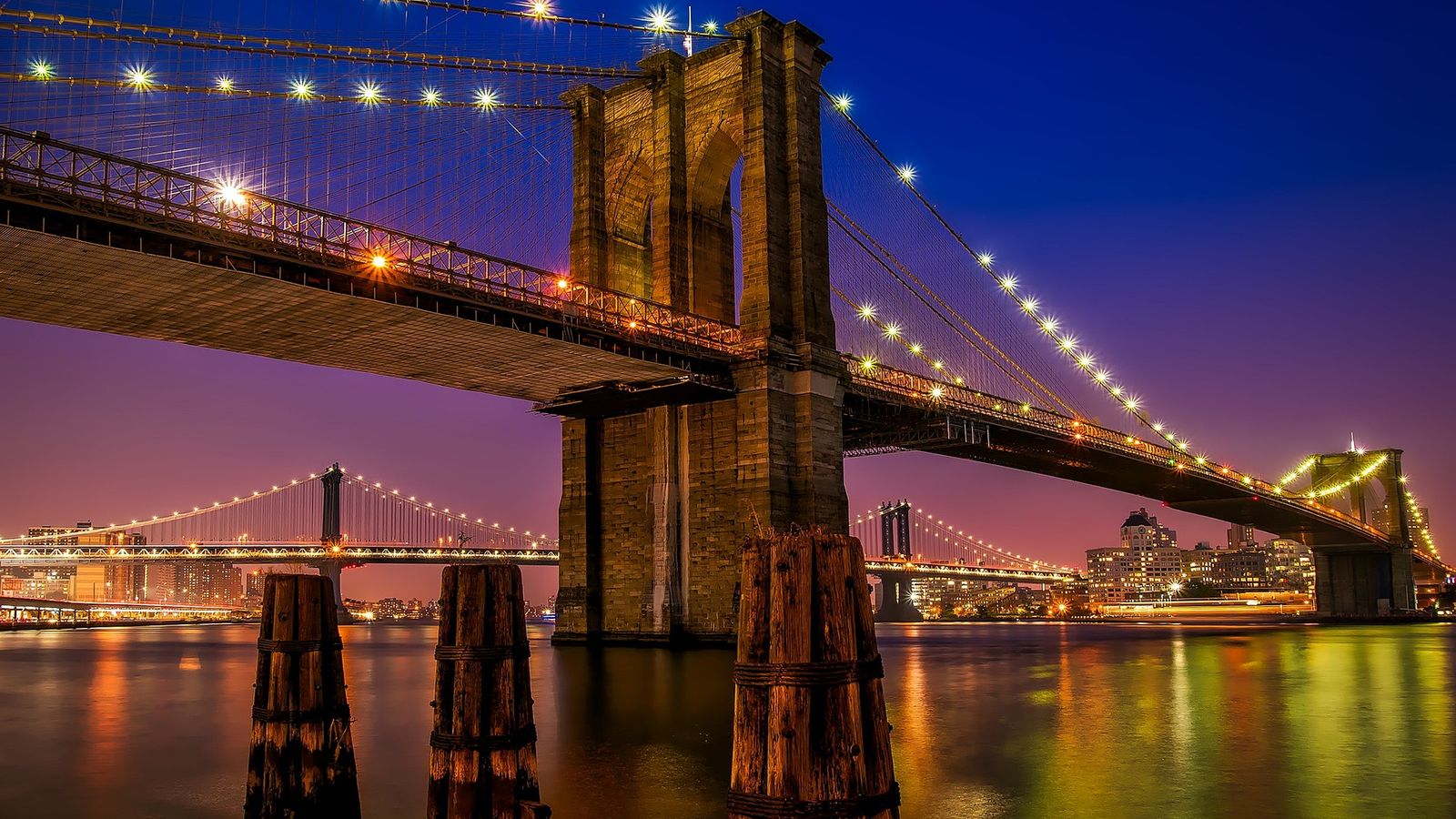
The Brooklyn Bridge opened in May 1883 to a crowd of tens of thousands — and one uncomfortable truth. The man officially credited with supervising its construction hadn’t left his apartment in over a decade. And the person who actually ran the job? She was never given the credit.
Her name was Emily Warren Roebling. And without her, there would be no bridge.
A Family Legacy Written in Steel
The Brooklyn Bridge was supposed to be John Roebling’s masterpiece. The German-born engineer had already built suspension bridges across the Ohio and Niagara Rivers. In 1869, he secured the commission for something far more ambitious — a bridge spanning the East River that would connect Brooklyn to Manhattan for the first time.
He never got to see it happen. A ferry accident that same year crushed his foot. John Roebling died of tetanus just weeks later, and the project passed to his son, Washington.
Washington Roebling was meticulous, obsessive, and deeply capable. To lay the foundations in the riverbed, workers operated in pressurized underwater chambers called caissons. Washington spent long hours underground alongside them — and it destroyed his health.
By 1872, he had developed caisson disease — what we now call the bends. Partially paralyzed, he was confined to his Brooklyn Heights apartment, able only to watch the construction site through binoculars from his window. The project had years left to run. Stopping wasn’t an option.
The Woman Who Stepped In
Emily Warren Roebling had married Washington in 1867. She was educated, sharp, and had spent years absorbing everything her husband knew about engineering. When he became incapacitated, she didn’t step back. She took over.
She became the project’s de facto chief engineer in all but name.
Emily didn’t just relay messages from Washington’s sickbed to the construction floor. She taught herself cable-making theory, steel fabrication, catenary curves, and load calculations. She met daily with the site engineers, fielded technical questions in real time, and delivered Washington’s instructions with the authority of someone who understood exactly why each decision mattered.
When Washington needed information to make decisions, she gathered it. When the workforce needed direction, she gave it. She crossed the bridge twice a day — before there was a bridge to cross — to carry knowledge back and forth between a bedridden genius and a half-finished structure rising over the East River.
The Letter That Saved the Project
As the project dragged into its second decade, pressure mounted to replace Washington Roebling entirely. Politicians and investors wanted results, and a chief engineer who hadn’t visited the site in years made an easy target.
Emily wrote the letter that stopped them.
She drafted a detailed defense of Washington’s leadership and presented it directly to the board of trustees. It was articulate, technically precise, and persuasive enough to keep him in position. The project continued under his name — and her hands.
When diplomats, investors, and civic leaders visited for updates, it was Emily who received them. When the press sought comment, it was Emily who spoke. For eleven years, she was the living bridge between the man with the vision and a world demanding it be delivered.
Enjoying this? Join New York lovers getting stories like this every week. Subscribe free →
The Walk That Should Have Been Hers
On May 24, 1883, the Brooklyn Bridge officially opened. Emily sat in the first carriage to cross, carrying a rooster — a symbol of victory, as was the custom of the era. It was a beautiful, poignant gesture. And it was the closest she came to being publicly recognized.
Washington received the official credit. Emily was described as a devoted wife who had supported her ailing husband. The engineers who worked beside her knew what she had actually done. The public record did not.
She went on to study law and became one of the first women admitted to the New York Bar. She died in 1903, two decades before the historical record began to catch up with what she had built. If you’re exploring Brooklyn’s extraordinary heritage — from its storied brownstones to its reinvented neighborhoods — a weekend in Brooklyn will show you exactly how deep those roots run.
A Plaque That Took a Century
It wasn’t until 1983 — exactly one hundred years after the opening — that a bronze plaque was installed on the bridge bearing her name. It reads, in part, that the bridge “endures as a testament to the self-sacrificing devotion of a woman.”
Devotion. Not engineering. Not leadership. Not the eleven years she spent doing the work.
The language has since been reconsidered. The neighborhoods Emily walked through each day have transformed beyond recognition — and yet the bridge itself stands exactly as she helped design it, carrying over 100,000 people across the East River every single day.
Every cable. Every granite tower. Every wire holds the invisible signature of a woman who spent eleven years making sure it would hold.
She never got to stand at the ribbon-cutting and say: I built this.
But she did.
You Might Also Enjoy
- The Brooklyn Neighborhood That New Yorkers Abandoned — Then the Whole World Came Running
- The Brooklyn Brownstone Was Almost Bulldozed — Then New Yorkers Started Fighting Back
- The Day Brooklyn Held a Funeral — and Why the Borough Still Won’t Let Go
Plan Your New York Trip
Ready to explore the city that built it all? Our neighborhood guide for visitors covers everything from where to stay in Brooklyn to which parts of Manhattan to discover first.
Join New York Lovers
Every weekday morning, get New York’s hidden gems, neighbourhood stories, food origins, and city secrets — straight to your inbox.
Subscribe free — enter your email:
Love more? Join 65,000 Ireland lovers → · Join 43,000 Scotland lovers →
Free forever · Unsubscribe anytime
